LipoMeltX Ingredients: A Full Label Breakdown
What Are the Main LipoMeltX Ingredients?
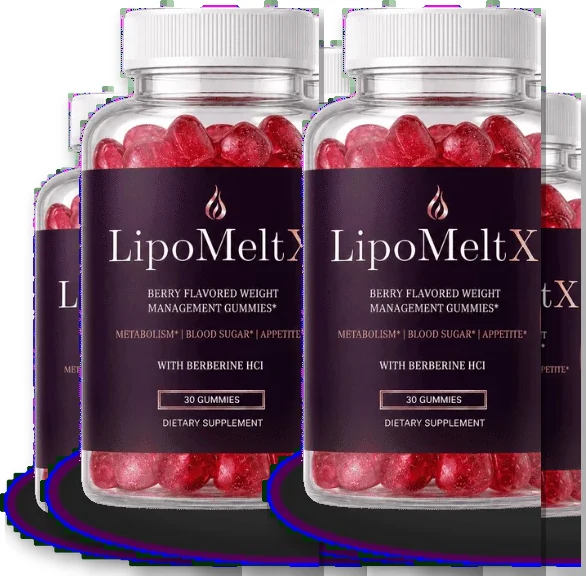
The LipoMeltX ingredient list published by the manufacturer names exactly three actives: Berberine HCl, cinnamon bark extract and chromium picolinate. All three sit on the blood-sugar and insulin-sensitivity side of weight management rather than the stimulant side. It is sold as a once-daily berry gummy, and the manufacturer publishes no milligram amount for any of the three.
- Berberine HCl: a plant alkaloid studied at roughly 500 mg two or three times daily for glucose control.
- Cinnamon bark extract: a botanical with mixed fasting-glucose results and an unstated cassia-or-Ceylon question.
- Chromium picolinate: an essential trace mineral with a very small measured effect on body weight.
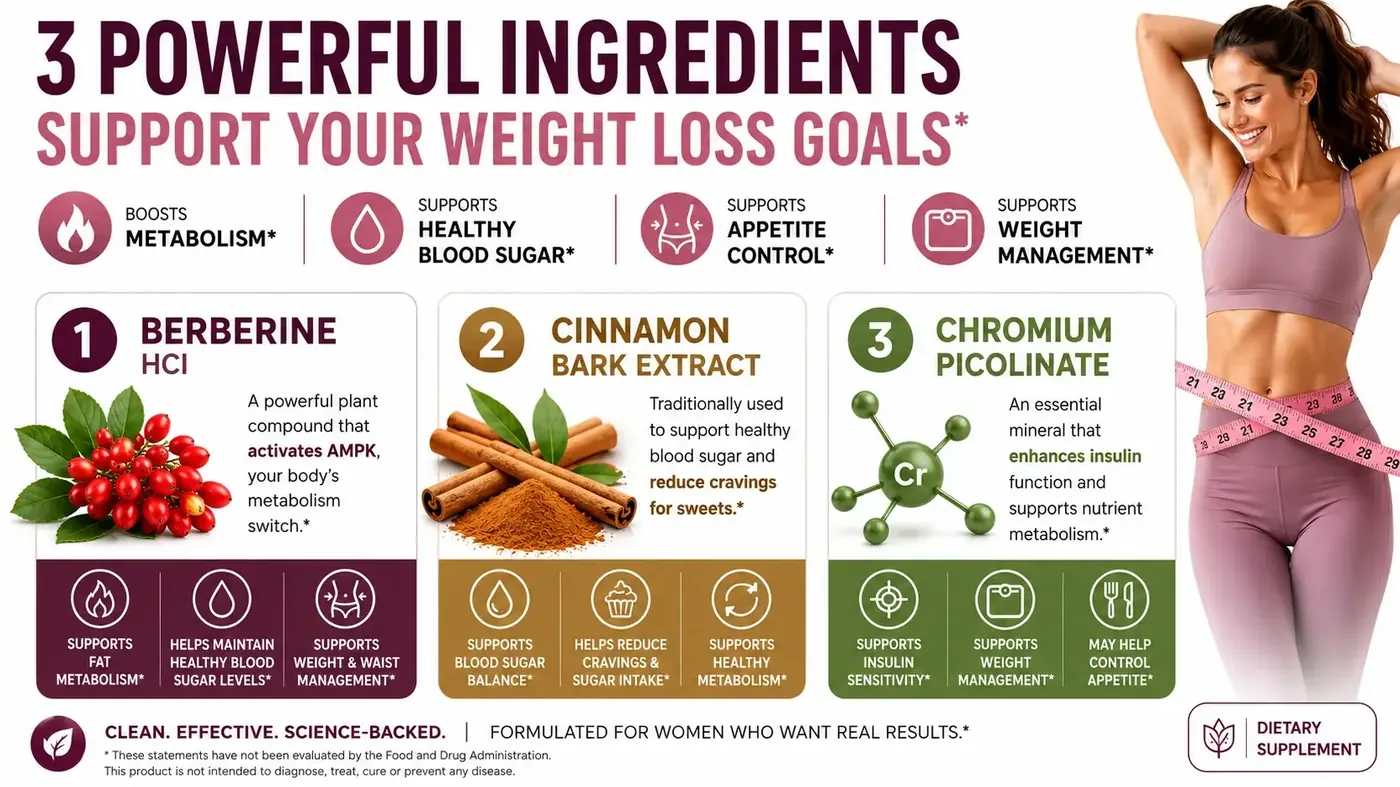
If you are reading the LipoMeltX ingredients list to decide whether the formula is worth your money, you are asking exactly the right question. A weight-management gummy lives or dies on two things: which compounds it contains, and how much of each. LipoMeltX names three actives that turn up right across the metabolism aisle — Berberine HCl, cinnamon bark extract and chromium picolinate. The sales copy additionally mentions apple cider vinegar and unnamed "thermogenic botanicals", neither of which appears on the ingredient graphic, so we treat those as marketing references rather than confirmed formula members.
This article walks the label one compound at a time. For each ingredient we cover what it is meant to support, how good the underlying evidence actually is, and where a real product tends to diverge from the studies quoted in the marketing. No cure claims and no miracle framing — just mechanism, evidence quality, and the practical questions a careful buyer should ask before checkout.
LipoMeltX Ingredients at a Glance
Here is the short version before we go deep. Three actives, three different jobs, three different levels of evidence. Keep this table in mind as you read, because the pattern that matters most is the gap between a studied dose and a gummy dose.
| Ingredient | Intended role | Evidence quality |
|---|---|---|
| Berberine HCl | AMPK activation, glucose control, "metabolism switch" | Consistent glucose data in type 2 diabetes at 1,000–1,500 mg/day; weight data secondary |
| Cinnamon bark extract | Post-meal glucose and sweet cravings | Genuinely mixed; some trials positive, others null |
| Chromium picolinate | Insulin signalling and nutrient metabolism | Effect on body weight small enough to be of debatable clinical relevance |
Berberine HCl: The Ingredient the Label Leads With
Berberine is a plant alkaloid found in barberry, goldenseal and several other species, and it is the compound LipoMeltX puts first. Its proposed mechanism is real and well described: berberine activates AMP-activated protein kinase, a cellular energy sensor, which is what the marketing means when it calls berberine "your body's metabolism switch".
The human evidence sits in glucose control rather than in fat loss. A systematic review and meta-analysis of randomised trials in people with type 2 diabetes found berberine lowered fasting blood glucose and HbA1c compared with control (Endocrine Journal, 2019). Those trials clustered on a dosing pattern of roughly 500 mg taken two or three times a day with meals — about 1,000 to 1,500 mg daily. The split is not arbitrary: oral berberine is poorly absorbed, and a single large dose is both worse absorbed and harder on the gut.
What the evidence does not show is that a once-daily gummy of unstated strength reproduces any of that. This is the central problem with the LipoMeltX label, and we have written it up separately in what a berberine gummy dose does not say on the label, which is the piece to read if berberine is your main reason for considering this product.
Cinnamon Bark Extract: A Genuinely Mixed Record
Cinnamon is the classic blood-sugar botanical, and it is on the LipoMeltX graphic with the claim that it helps "reduce cravings for sweets". The proposed mechanism is a slightly flatter glucose curve after a meal, which would plausibly blunt the rebound hunger that follows a sharp rise and fall.
The trial record is honestly mixed. A systematic review and meta-analysis of cinnamon in type 2 diabetes found no significant effect on HbA1c or fasting glucose across the pooled trials (Annals of Family Medicine, 2013), while individual randomised trials since have reported modest improvements. The NIH's own summary is blunt: cinnamon has not been shown to be helpful for any health condition (NCCIH).
There is a second question the LipoMeltX label does not answer. Cassia cinnamon carries coumarin, a compound that is hepatotoxic at high chronic intakes; Ceylon cinnamon carries very little. The label says "cinnamon bark extract" without specifying which, and without a milligram figure there is no way to reason about intake at all. Our full write-up of what the cinnamon and blood sugar trials show works through the numbers.
Chromium Picolinate: The Supporting Mineral
Chromium is an essential trace mineral involved in how insulin signals cells to take up glucose, and picolinate is the absorbable salt used in almost every metabolism formula on the shelf. The LipoMeltX graphic credits it with supporting insulin sensitivity, weight management and appetite control.
The best available synthesis is a Cochrane review of chromium picolinate in overweight and obese adults, which found a difference from placebo so small that the authors described its clinical relevance as debatable (Cochrane Database of Systematic Reviews, 2013). The more interesting signal in the wider literature is on cravings rather than on the scale, and even that is not settled.
Two practical points. First, chromium deficiency is rare in people eating an ordinary diet, which is one reason supplementing it produces so small a result. Second, the NIH's adequate intake figures are in the tens of micrograms per day while supplement trials commonly run 200 to 1,000 mcg (NIH Office of Dietary Supplements) — a hundredfold range that a label with no number tells you nothing about. We go further in our evidence check on chromium picolinate, appetite and weight.
Want to see the current formula, pricing and guarantee?
Bundles, the latest label and the money-back guarantee are only confirmed on the official store. That is the one place to check what the current LipoMeltX serving contains before you buy.
Check LipoMeltX Pricing and AvailabilityWhy a Gummy Dose Rarely Matches a Clinical-Trial Dose
This is the single most important idea for reading any supplement gummy, and it applies to every ingredient above. A research study picks a dose large enough to produce a measurable effect — 500 mg of berberine two or three times a day, hundreds of micrograms of chromium, gram-scale cinnamon. A gummy is a confection first and a supplement second. Pectin or gelatin, a sugar or sugar-alcohol system, an acidulant, colour and flavour make up nearly all of its weight, and the actives ride along in whatever space is left.
That constraint has two consequences. First, a single daily gummy almost always carries less active per serving than a capsule of the same footprint would. Second, bitter compounds cap how much can be added before the product becomes unpalatable — and berberine is intensely bitter and bright yellow, which is exactly the wrong combination for a sweet. The result is that gummy doses tend to sit below trial doses, sometimes well below. This is not a scandal; it is food science. But it means the studies quoted in marketing frequently belong to a higher dose than the one in the jar. Analytical work on weight-loss supplements has repeatedly found label content that does not match what is in the bottle, which is another reason to treat an unstated number with caution (Nutrients, 2024).
The takeaway is not "avoid gummies". It is "read the panel, not the promise". A gummy earns its place through adherence — people actually take something they enjoy, day after day, and consistency is the strongest predictor of whether any supplement does anything. The trade you are making is a smaller dose you will genuinely take against a larger dose you might abandon. Our comparison of what actually changes when a supplement becomes a chew sets out both sides of that trade.
Three Myths Worth Retiring Before You Buy
Ingredient pages attract a few persistent myths. Clearing them up is more useful than another paragraph of enthusiasm.
Myth one: "if the doses are lower than the studies, the product is pointless." Not quite. A sub-clinical dose is a weaker bet, not a zero. Combined with an improved diet and daily consistency, a modest amount of a real active can still contribute. The mistake is expecting a full clinical effect from a fraction of a clinical dose — that is the specific error, not taking the product at all.
Myth two: "a proprietary blend means the formula is stronger." A proprietary blend means you cannot see the split. When a panel lists a single combined figure for three ingredients, any one of them could be present in a token amount. The absence of per-ingredient milligrams is a reason to ask more questions, never a reason to assume generosity.
Myth three: "natural means safe, and safe means effective." These are three separate properties. Berberine is natural and still inhibits the enzymes that clear several prescription medicines. Cinnamon is natural and still raises a coumarin question at the cassia end. "Natural" tells you about origin, not about dose, safety, or whether the compound does what the label hopes.
How to Read the LipoMeltX Label Like a Skeptic
Put the three ideas above together and you get a simple checklist for LipoMeltX or any comparable gummy. First, find a per-serving milligram amount for each named active — not per bottle, not inside a blend. Second, compare that number to the doses used in the studies being referenced; if the gap is large, the cited evidence belongs to a stronger product. Third, look for the botanical species where it matters, such as cassia versus Ceylon cinnamon. Fourth, check the sweetener system and the serving size, because "one gummy" and "three gummies" are very different sugar conversations.
Where a manufacturer has not published milligram amounts — as is the case for all three LipoMeltX actives — the honest move is to say so plainly rather than to invent numbers. That uncertainty is not automatically disqualifying; plenty of reasonable products under-disclose. But it does shift the burden. You are buying a named formula with an unknown dose, and the price you pay should reflect that, as should your expectations. Our independent LipoMeltX guide breaks down what the manufacturer discloses and what it leaves off, alongside the guarantee terms that make a low-risk trial possible.
One more honest note: ingredients interact with people differently. If you take prescription medication, the berberine component matters far more to you than to the average reader — which is exactly why we wrote a separate, balanced guide to the possible LipoMeltX side effects and who should be cautious. Reading the label is step one; reading yourself is step two.
Note: this is general information, not medical or dietary advice. It does not diagnose, treat, cure or prevent any condition. Berberine inhibits CYP3A4 and P-glycoprotein and can raise circulating levels of several medicines (LiverTox, NIDDK). Speak with a doctor or pharmacist before starting any supplement, especially if you take medication, are pregnant or nursing, or manage a health condition.
Frequently asked questions
What are the main active ingredients in LipoMeltX?
The manufacturer's ingredient graphic names three actives: Berberine HCl, cinnamon bark extract and chromium picolinate. It is sold as a once-daily berry gummy. The sales copy also mentions apple cider vinegar and unnamed thermogenic botanicals, but neither appears on the ingredient graphic, so we do not treat them as confirmed formula members. No milligram amount is published for anything.
How much berberine is in LipoMeltX?
The manufacturer has not published an amount, so any specific number would be a guess. For context, the randomised trials that produced berberine's glucose data used roughly 500 mg two or three times a day, about 1,000 to 1,500 mg in total. Because a single daily gummy has limited room for a bitter alkaloid, it is reasonable to assume LipoMeltX sits well below that unless the delivered panel says otherwise.
Does LipoMeltX contain caffeine or stimulants?
Nothing on the published ingredient graphic is a stimulant. Berberine, cinnamon bark extract and chromium picolinate are all non-stimulant compounds, and the marketing does not claim an energy effect. Because the full "other ingredients" list is not published either, anyone who needs certainty on caffeine should read the panel on the delivered bottle rather than rely on the website.
Are LipoMeltX ingredients backed by studies?
Each ingredient has a research base, but the quality and the doses vary. Berberine has consistent glucose data at gram-scale daily doses, cinnamon has genuinely mixed results, and chromium picolinate shows a weight effect small enough that reviewers describe its clinical relevance as debatable. Evidence for an individual product only transfers cleanly when the doses match the studies, which is why the missing milligram amounts matter.
Keep reading on the LipoMeltX blog


Scientific references
- Effects of berberine on blood glucose in patients with type 2 diabetes mellitus: a systematic literature review and a meta-analysis — Endocrine Journal, 2019
- Cinnamon use in type 2 diabetes: an updated systematic review and meta-analysis — Annals of Family Medicine, 2013
- Chromium picolinate supplementation for overweight or obese adults — Cochrane Database of Systematic Reviews, 2013
- Label accuracy and quality of select weight-loss dietary supplements sold on or near US military bases — Nutrients, 2024
- NIH Office of Dietary Supplements — Chromium fact sheet for health professionals
- NIH NCCIH — Cinnamon: usefulness and safety
- LiverTox — Berberine, National Institute of Diabetes and Digestive and Kidney Diseases
Ready to check the current LipoMeltX label?
The official store is the only channel where the up-to-date formula, bundle pricing and money-back guarantee are honoured. Compare the panel to the doses in this article before you decide.
Go to the Official LipoMeltX Store