Berberine Gummies and the Dose Nobody Prints
Quick Answer: How Much Berberine Does a Gummy Actually Contain?
Usually far less than the studies, and usually unstated. The clinical literature on berberine for glucose control clusters around 500 mg taken two or three times daily — roughly 1,000 to 1,500 mg a day. A gummy is a sugar-and-pectin matrix with limited room for a bitter, poorly soluble alkaloid, and most gummy products either give a much smaller number or give none at all. If a label does not state milligrams of berberine per serving, you cannot compare it to anything.
- Studied range: about 500 mg, two to three times a day.
- What to look for: a milligram figure per serving, not per bottle and not inside a proprietary blend.
- Honest catch: bioavailability is poor even at studied doses — berberine is a low-absorption compound, which is why the dose is so high.

Why the number is so specific
Berberine is not a vitamin with a recommended intake. Its evidence base comes from a relatively narrow set of randomised trials in people with type 2 diabetes or metabolic syndrome, and those trials converged on a dosing pattern early: 500 mg, two or three times a day, taken with meals. That is not an arbitrary convention. It is the amount that produced measurable changes in fasting glucose and HbA1c in the studies people cite when they market berberine.
The reason it is split across the day rather than taken once is pharmacokinetic. Oral berberine has notoriously poor bioavailability — a large majority never reaches systemic circulation — and a single large dose is both worse absorbed and considerably harder on the gut. Splitting it is how the trials made it tolerable.
What a gummy can physically hold
A standard supplement gummy weighs roughly two to five grams, most of which is the gelling system, sweetener, acid and flavour. The active payload is small by construction. That is fine for something potent by the microgram — vitamin D, B12, biotin — and awkward for a compound dosed in hundreds of milligrams. Berberine is also intensely bitter and bright yellow, both of which cap how much can go into a chewable before it becomes unpleasant.
None of this means a berberine gummy is pointless. It means the honest comparison is not "gummy versus capsule", it is "the dose in this gummy versus the dose in the trial", and that comparison is impossible when the number is not printed. The wider trade-off between the two formats — dose capacity against the adherence a pleasant chew buys you — is the subject of our piece on what actually changes when a supplement becomes a chew.
What a good berberine label looks like
| On the label | What it tells you |
|---|---|
| "Berberine HCl 500 mg" | Comparable to the trial dose per serving. Check the serving size — one gummy or two? |
| "Berberine (from barberry extract) 100 mg" | A real number, well below the studied range. Still informative. |
| "Proprietary Metabolic Blend 250 mg" | Tells you nothing about berberine. The blend total is not the ingredient amount. |
| "With Berberine HCl" and no panel | Confirms presence only. This is where many gummies, including LipoMeltX, currently sit. |
Berberine is rarely sold alone, which makes this worse rather than better: a metabolism gummy usually pairs it with cinnamon bark extract and chromium picolinate, both of which have their own unstated amounts and their own modest evidence. Three silent numbers do not add up to one loud one. Our full LipoMeltX ingredients and label breakdown works through all three together.
Does a smaller dose do nothing?
Not necessarily, and this is where honesty cuts both ways. Trials are designed to detect an effect within twelve weeks in people with meaningfully disordered glucose. A smaller daily amount in a healthier person over a longer period has not been tested, so "below the trial dose" means "unstudied", not "proven useless". What it definitely means is that anyone quoting the trial results to sell an undisclosed dose is borrowing evidence that does not belong to their product.
The interaction problem does not scale down
One thing that does not become safe at a lower dose is the drug-interaction profile. Berberine inhibits CYP3A4 and P-glycoprotein, two of the main routes by which the body clears medication. That can raise circulating levels of statins, some blood thinners, immunosuppressants, certain antibiotics and more. It also has an additive effect with glucose-lowering drugs. If you take a prescription medicine, the conversation with a pharmacist is worth having regardless of how small the gummy is.
Medical note: this article is general information, not medical advice. Berberine is not recommended in pregnancy or breastfeeding and should never be given to infants. Speak to a healthcare professional before starting it, especially alongside diabetes or cardiovascular medication.
Scientific references
- LiverTox — Berberine, National Institute of Diabetes and Digestive and Kidney Diseases
- NIH NCCIH — Goldenseal (a berberine-containing botanical)
- Effects of berberine on blood glucose in patients with type 2 diabetes mellitus: a systematic literature review and a meta-analysis — Endocrine Journal, 2019
- NIH Office of Dietary Supplements — fact sheets and label guidance
- Label accuracy and quality of select weight-loss dietary supplements sold on or near US military bases — Nutrients, 2024
Frequently asked questions
How much berberine is in a typical gummy?
Often far less than the studied amount, and frequently the label never says. Clinical trials cluster around 500 mg two or three times daily, roughly 1,000 to 1,500 mg. A gummy is mostly gelling agent, sweetener and acid, leaving little room for a bitter, poorly soluble alkaloid, so most products either state a smaller figure or none at all.
Why do berberine studies use 500 mg two or three times a day?
That split emerged from trials in people with type 2 diabetes and metabolic syndrome, where 500 mg with meals produced measurable changes in fasting glucose. It is divided across the day for a practical reason: oral berberine is poorly absorbed, and a single large dose is both worse absorbed and harder on the gut, so splitting it keeps the amount tolerable.
Can a gummy physically hold a clinical berberine dose?
Rarely. A typical supplement gummy weighs two to five grams, most of it the gelling system, sweetener and flavour, so the active payload is small by design. Berberine is also intensely bitter and bright yellow, which caps how much fits before the chew turns unpleasant. That is why a gummy is better judged against its own printed number than against the trial dose.
Does a smaller berberine dose still do anything?
Possibly, but it is unstudied rather than proven. Trials were built to detect effects within twelve weeks in people with disordered glucose, so a smaller amount in a healthier person has simply not been tested. The interaction profile does not shrink with the dose, though: berberine affects how the body clears some medicines, so anyone on prescriptions should check with a pharmacist first.
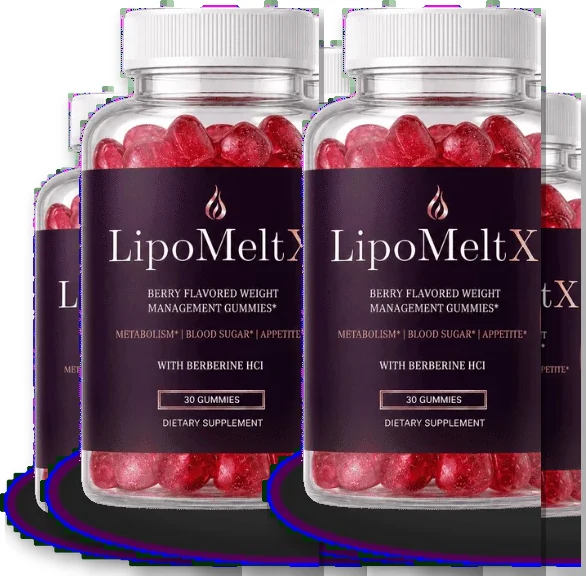
See how LipoMeltX handles the berberine question
LipoMeltX leads with Berberine HCl and prints no milligram figure for it anywhere. The 60-day guarantee is what lets you read the delivered panel and change your mind.
Go to the Official LipoMeltX Store