Gut Health Supplement Probiotic: Single-Strain vs Multi-Strain
Quick Answer: Should You Choose Single-Strain or Multi-Strain?
Choose a single-strain product when you are matching one well-documented organism to one specific reason, because that is the only situation where published research clearly transfers to the bottle in your hand. Choose a multi-strain blend for general daily maintenance, when no particular strain has been suggested to you. Neither format is automatically stronger: a gut health supplement probiotic is only as good as the strains it names, the dose it prints, and whether those organisms are still alive at the end of the shelf life.
- Single-strain: easiest to trace back to published trials, and the per-serving dose is unambiguous.
- Multi-strain: broader everyday coverage, but each individual organism is usually present in a smaller amount.
- Non-negotiable either way: full strain codes on the label, and a CFU count guaranteed through the expiry date rather than at the moment of manufacture.

What a "strain" actually is, and why the third word matters
Most probiotic labels stack three pieces of information into one long name, and only the last one really identifies what you are buying. In Lacticaseibacillus rhamnosus GG, the first word is the genus, the second is the species, and "GG" is the strain code. Genus and species tell you roughly which family of bacteria you are dealing with. The strain code tells you which specific, individually characterised organism is sitting in the capsule.
That distinction is not academic pedantry. Two strains of the same species can behave quite differently: they can differ in how well they survive stomach acid, which surfaces in the gut they adhere to, what compounds they produce as they ferment, and which immune signals they interact with. Research carried out on one strain therefore says very little about a different strain of the same species — in much the same way that two dogs of the same breed can have entirely different temperaments.
This is why the figure printed largest on the front of the box is usually the least useful one on the package. A product advertising twelve strains and fifty billion CFU has told you almost nothing if none of those strains is named in full. A product listing one fully identified strain at a stated dose has told you enough to go and read what has actually been published about it.
When a panel lists only "Lactobacillus blend" or "Bifidobacterium complex", the manufacturer has skipped precisely the part that carries the evidence. Some do this to protect a formulation they spent money developing. Many do it because there is nothing specific to protect.
The case for a single-strain formula
The argument for a single strain is traceability. When one organism is named in full and dosed in a printed number of colony-forming units, you can look up what has been studied about that organism, at roughly what dose, in roughly which group of people, and then decide whether any of it plausibly applies to you. Very little else on a supplement shelf offers that.
Single-strain products also make troubleshooting straightforward. If you get gas or bloating in the first fortnight — common, and usually temporary — you know exactly which organism to pause, retry at half a dose, or drop. With an eight-strain blend you have eight suspects and no method for narrowing the list beyond stopping everything.
There is a practical dosing point too. A capsule holds a finite amount of freeze-dried material, and whatever live count it carries has to be divided among however many strains are in there. Concentrating that capacity into one organism generally means a meaningfully higher count of that organism than you would get from a blend of the same headline size.
The trade-off is narrowness. If the reason you are taking anything at all is vague — "general gut health", "I want to feel less sluggish after meals" — then a single strain picked essentially at random is a narrow bet placed without information. Precision only helps when you have something to be precise about.
The case for a multi-strain formula
The counter-argument starts with ecology. A healthy gut community is not one organism; it is a large, varied population, and the reasoning behind a blend is that a mixture is more likely to contain something that suits your particular gut than a single lucky guess would be.
Multi-strain is also not automatically unstudied, which is a point people get wrong in both directions. Several of the better-documented commercial probiotics are fixed blends that were trialled as blends, and in those cases the combination itself is the studied unit. That is a perfectly legitimate position: you are not buying eight separate evidence bases, you are buying one, for the mixture exactly as sold. The catch is that this only holds if the product in your hand is the same formulation at the same total dose — a question worth asking before you assume any research transfers.
Where blends usually fall down is disclosure. Many print one total CFU figure for the whole mixture and never break it down, so a strain that earned a place on the front of the box may be present in a token amount behind it. When you cannot see the split, the strain list is functioning as marketing copy rather than as information. This is the single most common reason a promising looking blend turns out to be unassessable.
Single-strain and multi-strain side by side
| What you are comparing | Single-strain | Multi-strain |
|---|---|---|
| Strain identification | Usually printed in full, code included | Often partial; species names without codes are common |
| Dose transparency | One CFU figure, one organism, no ambiguity | Frequently a blend total with no per-strain split |
| Transfer from published research | Direct, if the strain matches the studied one | Direct only when the exact blend was the studied unit |
| Troubleshooting side effects | Simple — one variable | Difficult — several variables at once |
| Cost per serving | Typically the lower of the two for a comparable count | Typically higher; more organisms to grow and stabilise |
| Best fit | A specific goal, or a strain someone has named to you | General daily maintenance with no specific target |
The useful question is never "how many strains?" It is "which strains, at what dose, and studied for what?" A bottle that cannot answer those three has not earned a place in a daily routine, however impressive the number on the front looks.
Looking at metabolic support rather than probiotics?
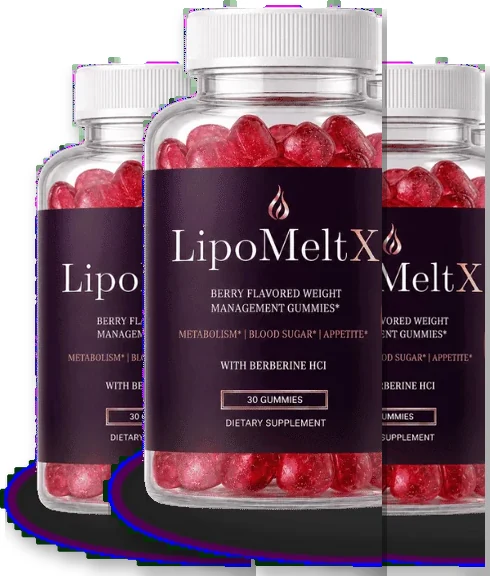
LipoMeltX is a once-daily berry gummy built on berberine, cinnamon bark extract and chromium picolinate. If that is closer to what you were searching for than a best gut health probiotic supplement, the official store is where stock, bundles and the current guarantee are listed.
Check Availability on the Official StoreWhat the evidence actually shows
Probiotics are one of the more heavily researched corners of the supplement aisle, and that volume of research cuts both ways. There is enough of it to say some things with reasonable confidence, and enough of it to see clearly where results are inconsistent. The pattern across the literature is that effects tend to be strain-specific, context-specific and modest, and that broad claims about "restoring your gut" are not what the underlying studies were designed to test.
The most consistent signals sit in digestive comfort during and after a course of antibiotics, and in some symptom measures for people with irritable bowel syndrome, where certain strains have been studied repeatedly. Even there the picture is uneven: different trials use different strains, different doses and different outcome measures, which is exactly why meta-analyses in this field so often end with a call for better standardisation rather than a clean verdict.
| What has been studied | How the evidence looks | What that does not mean |
|---|---|---|
| Digestive upset associated with antibiotic courses | The most repeatedly studied use, with a number of randomised trials and pooled analyses behind it | It does not mean any probiotic will do, or that it replaces medical advice about your prescription |
| Symptom scores in irritable bowel syndrome | Promising for particular strains; inconsistent across the field as a whole | Not a treatment for the condition, and results vary widely between individuals |
| Everyday bloating and regularity in healthy adults | Mixed. Some strains show short-term change; many trials are small | A supplement cannot compensate for a diet with very little fibre in it |
| Immune-related outcomes | Active research area, mechanistically interesting, clinically inconsistent | No probiotic prevents illness, and none should be described that way |
| Body weight and body composition | Weakest of the group. Effects reported are small and do not replicate reliably | Nothing here supports buying a probiotic as a weight loss strategy |
Two honest caveats belong with that table. First, "studied" is not the same as "proven for you": trial populations are frequently narrower than the marketing implies. Second, the field has a publication skew, as most fields do, so a run of positive headlines is weaker evidence than it appears from the outside.
None of this is unique to probiotics. It is the same argument that runs through every supplement category where the marketing names an ingredient and the panel declines to quantify it: a berberine gummy that never prints its milligrams is the identical problem in a different vocabulary, and the gummy format itself caps how much can be disclosed in the first place. If you want to see what a complete, honest ingredient audit looks like when the numbers are missing, our LipoMeltX ingredients and label breakdown is the worked example.
How to read a gut health supplement probiotic label
This is the part that separates a considered purchase from a guess, and it takes about ninety seconds per product once you know the sequence. Work down the panel in this order.
1. Find the strain codes. You want genus, species and an alphanumeric code for every organism listed. If codes are missing, the rest of the label is decoration.
2. Check what the CFU count is guaranteed against. "50 billion CFU at time of manufacture" and "50 billion CFU through end of shelf life" are very different promises. Live organisms die over time; only the second phrasing tells you what is left when you take it.
3. Look for a per-strain split. In a blend, a single total is a red flag. A breakdown per organism, even an approximate one, signals a manufacturer that expects to be checked.
4. Read the storage line. Some strains are stabilised for room temperature and some genuinely need refrigeration. A shelf-stable claim on a product that arrived warm in summer post is worth a second thought.
5. Check the carriers and allergens. Dairy-derived media, inulin or chicory fibre, and various sugar alcohols all show up in this category, and any of them can be the actual cause of bloating people blame on the bacteria.
6. Note the delivery format. Capsules, enteric coatings, powders and gummies protect live organisms to different degrees, and heat during gummy manufacture is a real constraint. We have written separately about what changes when a supplement moves from a capsule into a gummy, and most of that reasoning applies here too.
Run those six checks and a shortlist tends to collapse fast. That is the point: most of what is sold as the best gut health probiotic supplement fails at step one or step three, and you have saved yourself the trouble of comparing claims that were never comparable.

Probiotics, prebiotic fibre and weight: the honest version
The gut microbiome genuinely is connected to how the body handles energy. That connection is well established in mechanistic and observational research, and it is the reason so many weight products now mention gut health somewhere on the label. What does not follow is that swallowing a few billion bacteria once a day will move the number on a scale.
The intervention with the most consistent support here is not a probiotic at all — it is fibre. Fermentable fibre from ordinary food feeds the organisms already living in your colon, and it also does something a probiotic does not: it adds bulk and slows gastric emptying, which affects fullness directly. Anyone searching for the best fiber supplement for gut health and weight loss is closer to the useful end of this aisle than anyone comparing CFU counts, though vegetables, pulses and whole grains remain the cheaper and better-evidenced route.
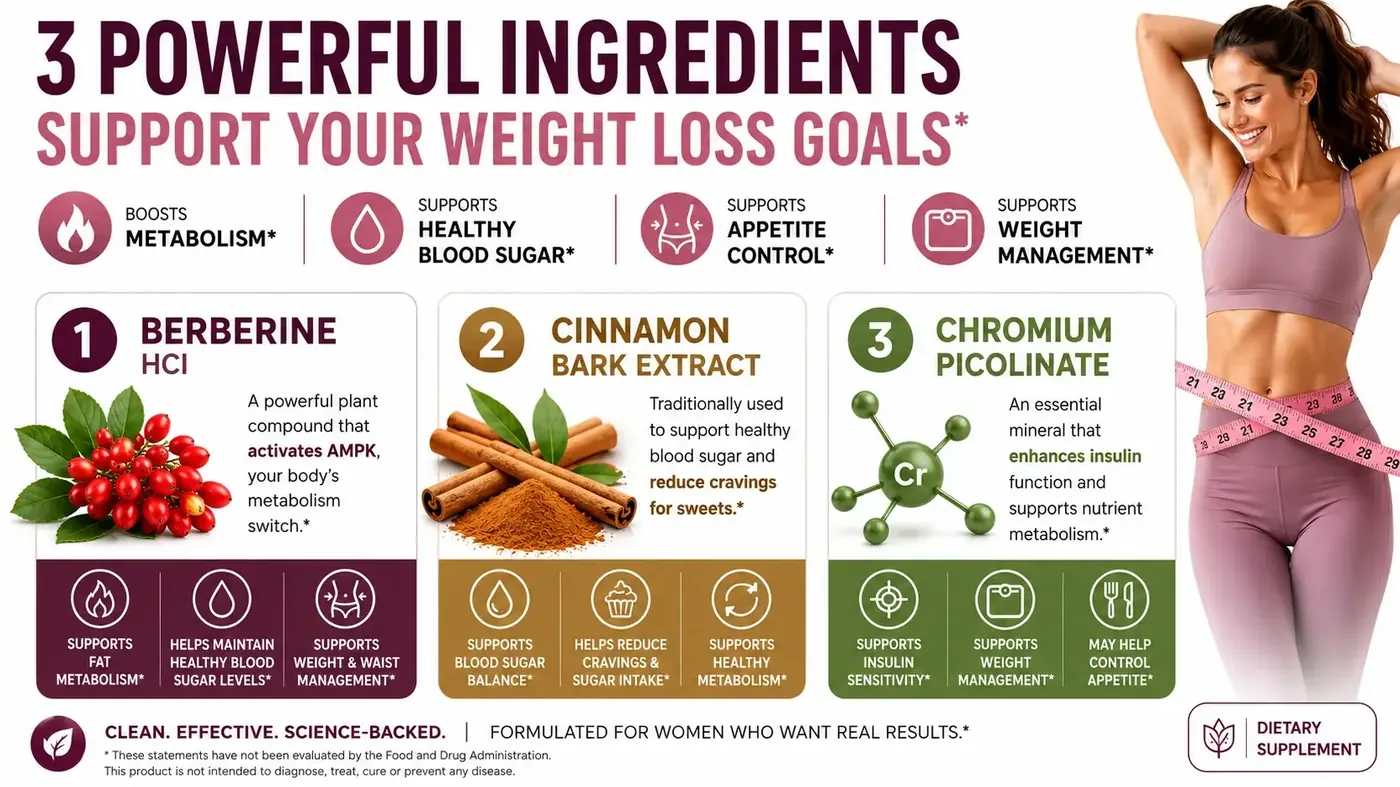
It is also worth being clear about categories. A probiotic delivers live organisms. A prebiotic feeds them. A metabolic supplement does neither — it targets glucose handling, appetite or thermogenesis through plant compounds and minerals. LipoMeltX sits in that third category: it is built around berberine HCl with cinnamon bark extract and chromium picolinate, and it contains no probiotic strains at all. Products from different categories are not competitors, and treating them as interchangeable is how people end up disappointed by both.
What a probiotic cannot do
This section exists because the category is unusually prone to overstatement, and an honest limits list is more useful than another paragraph of enthusiasm.
A probiotic does not diagnose, treat, cure or prevent any disease, and no dietary supplement may be sold as though it does. It does not permanently repopulate your gut: for most strains, colonisation is transient, and counts fall away within days to weeks of stopping. It does not undo a diet built on ultra-processed food, and it does not compensate for chronic short sleep or a sedentary week, both of which influence digestion more than most people expect.
It also cannot be assumed safe for everyone. People who are severely immunocompromised, who have a central venous catheter, who are critically ill, or who have had significant bowel surgery are groups where live organisms warrant medical supervision rather than self-selection. Infants and anyone pregnant or nursing should take advice rather than a recommendation off a website.
And it cannot be judged from a single week. Response varies substantially between individuals because the starting community varies substantially between individuals. Two people can take the identical product with completely different outcomes, and neither result proves anything about the product in general.
Medical note: this article is general information, not medical advice. Dietary supplements are not intended to diagnose, treat, cure or prevent any disease. Speak with a doctor or pharmacist before starting a probiotic if you take prescription medication, are immunocompromised, have a chronic digestive condition, or are pregnant or nursing.
Choosing in practice: a short decision path
If a clinician or pharmacist has named a strain to you, buy that strain, in a single-strain product, at the dose you were given. Everything in this article is downstream of that instruction.
If you have a specific, recurring digestive complaint and no guidance, a single-strain product whose organism has actually been studied for that complaint is the more informative first experiment, because you will be able to interpret the result either way.
If your goal is general daily maintenance, a multi-strain blend is a reasonable default provided it names its strains and splits its doses. Give it four to eight weeks of consistent use, keep the rest of your routine steady so you can read the result, and prioritise fibre from food at the same time. If nothing changes, stop — there is no prize for finishing the bottle.
Finally, be sceptical of any product marketed on strain count alone, and of any page that promises a specific outcome from a live culture. The genuinely good products in this category tend to be the least dramatic about what they claim.
Frequently asked questions
Is a multi-strain probiotic better than a single-strain one?
Not by default. More strains is a marketing number, not a measure of quality. A single named strain at a printed dose can be matched to published research; a blend of twelve unnamed organisms cannot. Multi-strain formulas make sense for general daily use, or when the exact blend you are buying is the one that was studied. Single-strain makes sense when you have a specific reason and a specific strain in mind.
Do probiotics need to be refrigerated?
It depends entirely on the strain and the manufacturing process. Some organisms are freeze-dried and stabilised so they hold their count at room temperature; others lose viability quickly once warm. The label is the only authority here. If it says refrigerate, refrigerate it, and treat a shipment that arrived warm with suspicion.
How long should you take a gut health supplement probiotic before judging it?
Most trials in this area run somewhere between four and twelve weeks, so four weeks is a reasonable minimum before you decide anything. The first one to two weeks can bring mild gas or bloating that usually settles. If nothing has changed after two to three months of consistent daily use, that is useful information too, and continuing out of habit is not a plan.
Can you take a probiotic alongside a weight management gummy?
They are different categories and are commonly taken together, but stacking supplements makes it harder to tell what is doing what, and some botanical ingredients carry their own interaction profiles. If you take prescription medication, are pregnant or nursing, or have a condition affecting your immune system or digestive tract, ask a pharmacist or doctor before combining anything.
Scientific references
- NIH Office of Dietary Supplements — Probiotics fact sheet for health professionals
- NIH NCCIH — Probiotics: what you need to know
- Efficacy of single-strain probiotics versus multi-strain mixtures: systematic review of strain and disease specificity — Digestive Diseases and Sciences, 2021
- Mayo Clinic — expert answers on probiotics and prebiotics
- Harvard T.H. Chan School of Public Health — The Nutrition Source: the microbiome
Where to buy LipoMeltX gummies
Anyone searching where to buy fat burning gummies should order from the official store rather than a marketplace listing, because that is the only channel where the current LipoMeltX price, bundle options and money-back guarantee are honoured.
Go to the Official LipoMeltX Store