LipoMeltX Ingredient Amounts vs. Studied Clinical Doses: What's Missing
Quick Answer: Does LipoMeltX Match the Studied Doses?
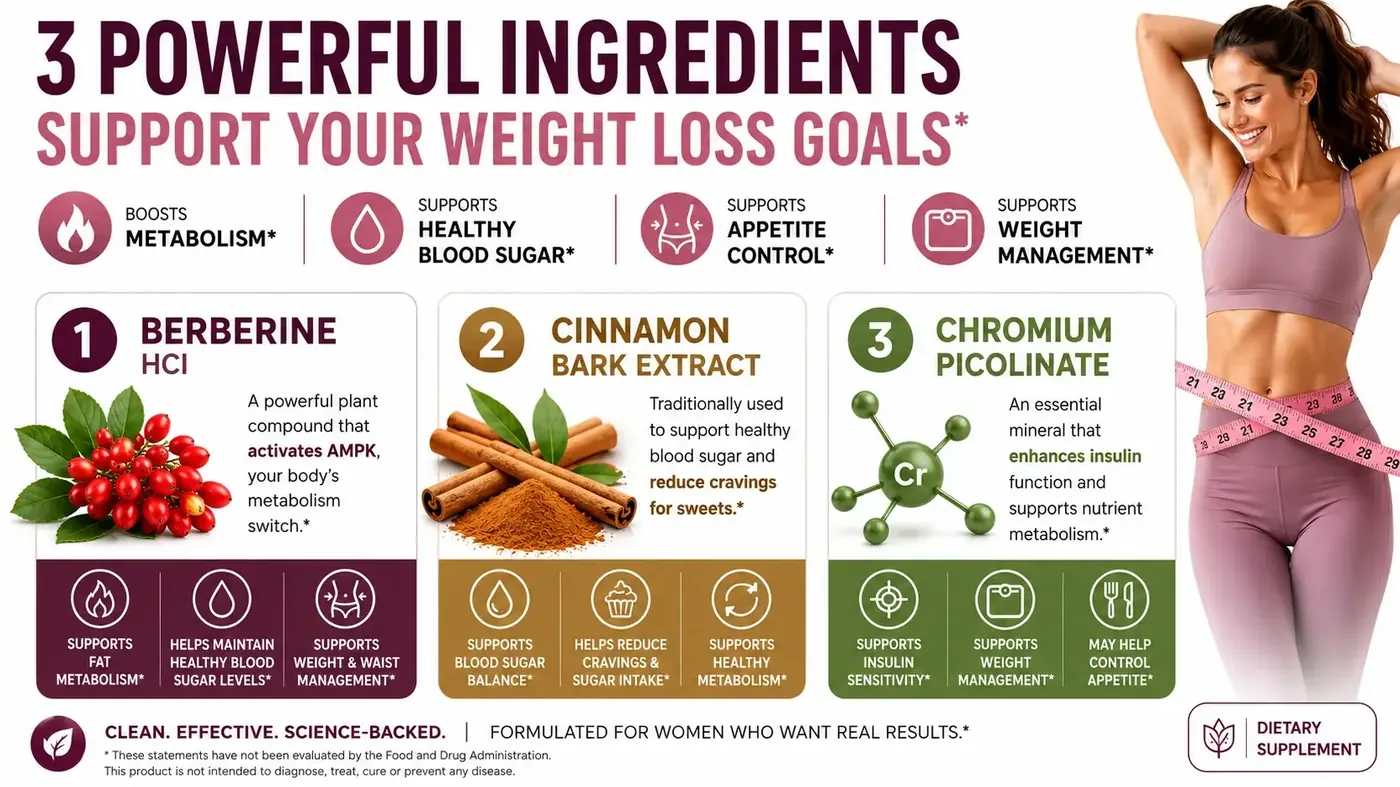
Nobody can say, including us. The LipoMeltX sales page names three ingredients — Berberine HCl, Cinnamon Bark Extract and Chromium Picolinate — on an infographic image, but it prints no Supplement Facts panel and no milligram or microgram figure for any of them anywhere on the site. Clinical trials on all three ingredients used specific, published dose ranges. Without a printed amount, there is no way to check whether one daily gummy comes anywhere close.
- Berberine trials: commonly around 500 mg two to three times daily (roughly 1,000–1,500 mg/day).
- Cinnamon trials: a wide range, from about 120 mg/day up to several grams, with signal clustering higher.
- Chromium trials: typically 200–1,000 mcg/day.
- LipoMeltX label: 0 mg, 0 mcg printed for all three. Unknown means unknown.
Every supplement claim ultimately rests on a number that never makes it into the marketing copy: how much. A weight-management gummy can name berberine, cinnamon and chromium truthfully and still deliver amounts too small to do anything, because "contains X" and "contains a studied amount of X" are different claims. This article does one specific thing: it lines up the dose ranges used in published trials on each of LipoMeltX's three named ingredients against what LipoMeltX itself discloses, and it is explicit about the point where the comparison simply cannot be finished.
What the LipoMeltX Label Actually Prints
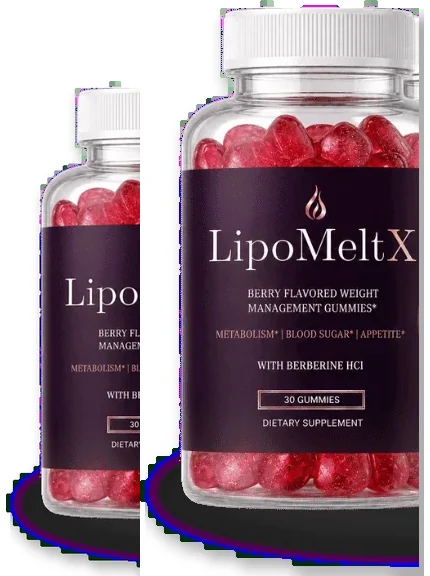
We read the official sales page, the upsell page, and the site's info pages directly. There is no Supplement Facts panel anywhere — no panel image, no text table, no percent Daily Value column, no per-serving milligram line. The only ingredient information a visitor sees is a graphic titled "3 Powerful Ingredients Support Your Weight Loss Goals," listing Berberine HCl, Cinnamon Bark Extract and Chromium Picolinate by name, with a short marketing sentence under each and no quantity next to any of them. The bottle images show "30 Gummies" and the FAQ says to take one gummy daily; neither says how much of the three actives that gummy contains.
This is worth being precise about, because it is easy to read three named ingredients and unconsciously assume a real dose sits behind them. It might. It might not. The page simply does not say, and a page that discloses names but never amounts has told you less than it looks like it has.
Berberine HCl: What the Trials Actually Dosed
Berberine is the ingredient LipoMeltX leads with, and it also happens to be the best-studied of the three. A meta-analysis pooling randomized trials of berberine for type 2 diabetes, hyperlipidaemia and hypertension found consistent, dose-dependent improvements in blood glucose and lipid markers across the pooled studies (Lan et al., Journal of Ethnopharmacology, 2015). The regimen that recurs across this literature, and across the individual trials feeding that pooled analysis, is roughly 500 mg taken two or three times a day — a total daily intake in the neighbourhood of 1,000 to 1,500 mg — usually sustained for 8 to 24 weeks before outcomes were measured.
That figure matters because it sets the scale of what "a berberine dose" means in the evidence base. A capsule regimen delivering three separate 500 mg doses across a day is a meaningfully different exposure than a single daily gummy, before you even ask how many milligrams that gummy contains. We go deeper on the general dose-gap problem in gummy-format berberine products in Berberine Gummies and the Dose Nobody Prints; the point that matters here is narrower and specific to this product: LipoMeltX prints no number to compare against the 1,000–1,500 mg/day range at all.
Cinnamon Bark Extract: A Wider, Messier Dose Picture
Cinnamon's clinical literature is less tidy than berberine's, and that is useful context, not a dismissal. An updated systematic review and meta-analysis of cinnamon use in type 2 diabetes pooled trials that varied considerably in the dose and form of cinnamon used, and found a statistically significant reduction in fasting plasma glucose across the pooled data, while effects on HbA1c and lipids were less consistent (Allen et al., Annals of Family Medicine, 2013). The trials included in reviews like this one span a wide dose range — from roughly a few hundred milligrams a day at the low end up to several grams a day at the high end — and the heterogeneity in both dose and cinnamon species (cassia versus Ceylon) is part of why the pooled results are inconsistent.
The practical takeaway is that "cinnamon works" is not a single, clean claim with one dose behind it; it is a range, and the amount matters for whether an individual trial found an effect at all. A cinnamon extract present in trace amounts sits outside essentially every dose that has been tested, however small the difference between "trace" and "meaningful" sounds on paper. Our companion piece, Cinnamon Bark Extract and Blood Sugar: A Careful Read, walks through the cassia-versus-Ceylon and coumarin questions in full; here, the relevant fact is simply that LipoMeltX's page gives no gram or milligram figure to place anywhere in that range.
Chromium Picolinate: A Narrower, Better-Defined Range
Chromium is the most tightly dosed of the three in the literature. A Cochrane systematic review of chromium picolinate supplementation in overweight or obese adults pooled randomized trials using daily doses that clustered mainly between 200 and 1,000 micrograms, over periods of roughly 8 to 24 weeks, and found a small, statistically detectable reduction in body weight that the reviewers themselves judged too small to be clinically meaningful, with low confidence in the estimate (Tian et al., Cochrane Database of Systematic Reviews, 2013). The Adequate Intake for chromium in adults is only about 20 to 35 micrograms a day from food, which is a separate, much smaller figure describing ordinary dietary needs rather than a supplemental dose used in trials.
Because chromium is measured in micrograms rather than milligrams, a compliant label is a short, checkable line: something like "Chromium (as chromium picolinate) 200 mcg." LipoMeltX's page never reaches that level of specificity. Our evidence check on chromium picolinate, appetite and weight covers what that modest effect size actually buys a buyer; the dose comparison here simply cannot proceed past "trials used 200–1,000 mcg" and "LipoMeltX prints nothing."
Side by Side: Trial Doses vs. What's Printed
| Ingredient | Typical dose range in published trials | Amount printed on LipoMeltX label | Can the comparison be completed? |
|---|---|---|---|
| Berberine HCl | ~500 mg, two to three times daily (roughly 1,000–1,500 mg/day) | Not printed anywhere on the site | No — unknown |
| Cinnamon Bark Extract | Wide range across trials, roughly hundreds of mg up to several grams/day | Not printed anywhere on the site | No — unknown |
| Chromium Picolinate | 200–1,000 mcg/day | Not printed anywhere on the site | No — unknown |
Reading that table honestly requires resisting two opposite temptations. One is assuming the worst — that an unprinted amount must mean a trivial one. The other is assuming the best — that a named ingredient probably shows up at a "normal" or clinical amount because otherwise why list it. Neither assumption is something we can verify from the public materials. The only accurate statement is the one in the right-hand column: unknown.
Why a Gummy Format Makes This Harder, Not Easier
There is a physical constraint worth naming plainly, as general formulation knowledge rather than a specific claim about this product: a single chewable gummy has a limited mass budget, most of which typically goes to the gel base, sweetener and flavouring needed to make it palatable and shelf-stable. Fitting a 1,000–1,500 mg berberine regimen, or a multi-gram cinnamon dose, into one small gummy alongside those necessary structural ingredients is a real engineering problem, which is one reason gummy weight-management products across the category tend to under-dose relative to capsule-based clinical regimens. LipoMeltX does not publish its gummy weight or its "other ingredients" list, so we cannot say specifically how this product resolves that trade-off — only that the trade-off exists industry-wide and that nothing on this site's pages tells a buyer how it was handled here.
What a Fully Disclosed Label Would Let You Do
The frustrating part of this exercise is how simple the fix would be. A standard Supplement Facts panel — ingredient name, form, amount per serving, percent Daily Value where one exists — would let anyone place LipoMeltX directly against the ranges above in about thirty seconds, no research required. That is exactly the information format used on virtually every reputable supplement label, and its absence here is not a minor stylistic choice; it is the single piece of information that would resolve every question this article raises. Until that panel exists, "contains berberine, cinnamon and chromium" and "contains studied amounts of berberine, cinnamon and chromium" remain two different, unverifiable claims, and only the first one is something the current label actually supports.
Editorial note: this comparison uses dose ranges reported in the cited systematic reviews and meta-analyses, checked against the current PubMed record for each citation. It draws no conclusion about the actual amount of any ingredient in LipoMeltX, because that figure is not published anywhere we could find.
Frequently asked questions
Does LipoMeltX print how many milligrams of berberine, cinnamon or chromium it contains?
No. The official sales page shows an ingredient infographic naming Berberine HCl, Cinnamon Bark Extract and Chromium Picolinate, but no Supplement Facts panel appears anywhere on the site, and no milligram or microgram amount is printed for any of the three. There is no way, from the published materials, to know the dose in a single gummy.
What doses have berberine clinical trials actually used?
Trials pooled in systematic reviews of berberine for blood sugar, lipids and blood pressure have commonly used around 500 mg taken two or three times a day, for a total of roughly 1,000 to 1,500 mg daily, typically over 8 to 24 weeks. That is the dose range the evidence behind berberine actually describes; whether a single daily LipoMeltX gummy reaches any fraction of it is unknown because no amount is printed.
Is a gummy capable of holding a clinical dose of these ingredients?
Physically, a single gummy is a small, sweetened, chewable matrix, and formulators generally cannot fit gram-level actives into one piece without making it too large, bitter or unstable to eat. That is a general manufacturing constraint, not a claim about this specific product, since LipoMeltX does not publish its formulation weight or ingredient amounts either.
Why does this matter if the ingredients are still "in" the product?
Being present and being present at an effective amount are different claims. Almost every ingredient in the trials reviewed here shows benefits that scale with dose, and several show no effect at low doses. A label that names an ingredient without a quantity lets a shopper assume a clinical amount without giving them the information to check it.
Keep reading on the LipoMeltX blog



Scientific references
- Meta-analysis of the effect and safety of berberine in the treatment of type 2 diabetes mellitus, hyperlipemia and hypertension — Lan J, et al., Journal of Ethnopharmacology, 2015 (PMID 25498346)
- Cinnamon use in type 2 diabetes: an updated systematic review and meta-analysis — Allen RW, et al., Annals of Family Medicine, 2013 (PMID 24019277)
- Chromium picolinate supplementation for overweight or obese adults — Tian H, et al., Cochrane Database of Systematic Reviews, 2013 (PMID 24293292)
- NIH Office of Dietary Supplements — Chromium fact sheet for health professionals
Read the delivered label before your second bottle
The amounts discussed here are not printed on the LipoMeltX website. If they appear anywhere, it will be on the physical bottle you receive.
Order LipoMeltX