Garcinia Cambogia Weight Loss: What the HCA and Appetite Trials Say
Does Garcinia Cambogia actually help you lose weight?
Garcinia Cambogia offers modest, inconsistent help at best. Its active hydroxycitric acid (HCA) may slightly curb appetite and blunt fat storage, but 12-week trials range from ineffective to moderate, and results rarely beat diet alone by much. Treat it as appetite support inside a plan rather than a stand-alone weight loss solution.
- HCA dose: trials typically use about 1,500 mg per day; a NOAEL up to ~2,800 mg/day is cited.
- Results: 12-week studies span ineffective to moderate, with wide variation between people.
- Cautions: possible nausea or headache, and rare liver reports at high doses.
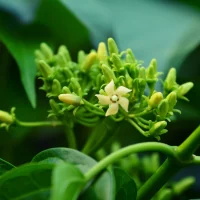
Few supplement ingredients have ridden a bigger hype cycle than Garcinia Cambogia. A single television endorsement over a decade ago turned an obscure Southeast Asian fruit into a global sensation, and the Garcinia Cambogia weight loss story has been repeated on labels ever since. So it is worth asking the plain question the marketing skips: when researchers actually put it in a randomized trial, what happened?
The short version is that the evidence is mixed and modest, the mechanism is more interesting than the results, and the honest positioning is “minor appetite support” rather than “fat destroyer.” This article breaks down the hydroxycitric acid mechanism, walks through what the trials found, sets a safe daily dose, covers the side effects worth respecting, and explains how it compares with the blood-sugar ingredients sold alongside it.
What HCA is and what it is supposed to do
The active ingredient in Garcinia cambogia is not the fruit pulp but a compound concentrated in the rind: hydroxycitric acid, universally shortened to HCA. Two mechanisms get cited for it, and both are real in a test tube.
First, HCA inhibits an enzyme called ATP-citrate lyase. That enzyme is a step the body uses to convert surplus carbohydrate into stored fat, so the theory is that blocking it means less new fat gets laid down when you eat more carbohydrate than you burn. Second, some research suggests HCA can raise serotonin levels in the brain, and because serotonin is tied to satiety and mood, the idea is that this dampens appetite and the urge to eat when you are not hungry.
Both are plausible stories. The problem — and it is the recurring problem with this whole ingredient — is that a mechanism working in isolated cells or in rodents does not automatically translate into pounds lost by a human on an ordinary diet. The gap between “this enzyme is inhibited in a dish” and “this person weighs less in three months” is exactly where Garcinia's reputation runs into trouble.
What the Garcinia Cambogia weight loss trials actually found
This is where the marketing and the literature part ways. Garcinia has been tested in a fair number of randomized controlled trials, and the results are genuinely all over the map.
Some 12-week studies reported a small but statistically significant edge for Garcinia groups over placebo — a modest advantage in body weight and, in a few, self-reported appetite. Others, including some of the better-controlled trials, found no significant difference at all once diet was accounted for. When researchers pool these studies into meta-analyses, the typical conclusion is a small average effect of around a kilogram or two, with the strong caveat that the effect is inconsistent, the trials are often short and small, and the difference may not be meaningful in everyday terms.
The most cited independent review of the field concluded, in effect, that the magnitude of any weight-loss effect is small and its clinical relevance uncertain. That is not a dismissal — it is a fair description of an ingredient that does something detectable in some people, some of the time, and nothing measurable in others.
| What was measured | How the evidence looks | What it does not mean |
|---|---|---|
| Body weight over 8–12 weeks | Small average edge in some trials; none in others | Not a reliable, stand-alone weight-loss method |
| Appetite and satiety | Mixed self-reported benefit; hard to measure objectively | Not a guaranteed appetite suppressant for everyone |
| Fat storage (ATP-citrate lyase) | Plausible mechanism shown in lab and animal models | Does not clearly translate to human fat loss on a normal diet |
| Overall effect size | Small, inconsistent, clinically uncertain | Nowhere near prescription weight-loss medication |
A fair reader takes two things from that table. The ingredient is not a scam — it has a mechanism and a scattering of positive data. But it is also not what the breathless marketing implies, and anyone expecting Garcinia alone to reshape their body in a month is setting up for disappointment. For a different lever with a clearer metabolic mechanism, compare this against what the green tea extract weight loss studies show, where the effect is also small but more consistently repeatable.
How much Garcinia Cambogia per day, and how to read a label
If you decide to try it, the number that matters is not milligrams of “Garcinia cambogia” but milligrams of HCA, and the standardization percentage that connects the two. A product might list “1,000 mg Garcinia cambogia (50% HCA),” which delivers 500 mg of actual HCA per serving. Trials that reported anything tended to use around 1,500 mg of HCA per day, usually split before meals, so the standardization percentage is doing the real work on the label.
On safety headroom: reviews have cited a no-observed-adverse-effect level (NOAEL) for HCA up to roughly 2,800 mg per day in short-term studies, which is comfortably above the typical 1,500 mg dose. That headroom is reassuring but not an invitation to mega-dose — more HCA has never been shown to mean more weight loss, and the rare safety concerns cluster at the high end. Take it with food, keep near the studied range, and do not stack several Garcinia products at once. To see how a dose like this sits beside berberine, cinnamon and chromium in a real formula, our complete LipoMeltX ingredient label breakdown lays out each active and what disclosure to expect.
Prefer appetite support as part of a complete daily formula?
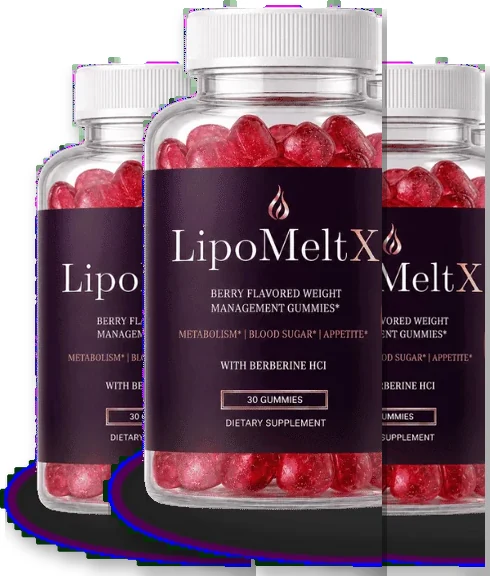
LipoMeltX does not use Garcinia. It combines berberine HCl, cinnamon bark extract and chromium picolinate into one berry gummy taken once a day. Current bundles, pricing and the money-back guarantee live on the official store.
Check Availability on the Official StoreSide effects and who should be careful
For most healthy adults, Garcinia at label doses is fairly well tolerated, and the common side effects are mild: nausea, headache, digestive upset, and occasionally dizziness. These usually settle or resolve on stopping.
The concern that deserves genuine respect is the liver. There are rare, documented reports of liver injury associated with some Garcinia-containing products. Importantly, many of these involved high doses or multi-ingredient combination products where Garcinia was only one component, which makes the ingredient hard to indict cleanly — but the pattern is real enough that caution is warranted. The sensible playbook mirrors any concentrated botanical: stay within the studied dose, take it with food, avoid stacking, and stop and seek medical advice if you notice dark urine, persistent nausea, abdominal pain or yellowing of the skin or eyes.
Some groups should skip it or clear it with a clinician first: anyone pregnant or nursing, people with an existing liver condition, and — because of the serotonin angle — anyone taking antidepressants or other serotonergic medication, where the theoretical interaction is worth a professional opinion. If you want the plain-language version of what to watch for across a whole formula, we keep one in the LipoMeltX side effects worth knowing.
Three myths about Garcinia Cambogia, corrected
Myth 1: “It blocks fat, so you can eat what you want.” The ATP-citrate lyase mechanism only concerns new fat made from surplus carbohydrate, and even that translates weakly to humans. It does nothing to license a calorie surplus; overeat and you will still gain.
Myth 2: “A higher HCA percentage means dramatically better results.” A higher standardization percentage helps you hit the studied 1,500 mg HCA dose in fewer capsules, which is genuinely useful. It does not turn a modest, inconsistent ingredient into a powerful one. Past the effective dose, extra HCA buys nothing.
Myth 3: “Natural means it can't do anything unwanted.” Natural and inert are not the same word. Garcinia has a mechanism, a dose, side effects and rare safety signals — which is exactly what an ingredient with real activity looks like. Respect it in both directions.
Medical note: this article is general information, not medical advice. Dietary supplements are not intended to diagnose, treat, cure or prevent any disease. Speak with a doctor or pharmacist before starting Garcinia Cambogia if you take prescription medication, take an antidepressant, have a liver condition, or are pregnant or nursing.
The realistic verdict on Garcinia and HCA
Strip away the hype and Garcinia Cambogia lands in a familiar place for weight-loss botanicals: a plausible mechanism, a scattering of positive trials, a similar scattering of null ones, and an overall effect that is small, inconsistent, and best described as support rather than solution. That is not a reason to sneer at it, and not a reason to build a plan around it. Used honestly — near the studied 1,500 mg HCA dose, inside a calorie-controlled diet, alongside movement and consistency — it may give some people a little appetite help. Used as a magic bullet, it will disappoint. The consistency required to know whether any supplement is helping you is a topic in itself; we cover realistic timelines in our guide to how long weight loss gummies take to work.
Garcinia is not the only botanical whose reputation outran its trial record. The other classic example is green tea extract, whose EGCG-and-caffeine mechanism is real but whose measured effect is a couple of pounds rather than a transformation. Reading both side by side is a good inoculation against single-ingredient marketing.
Frequently asked questions
Does Garcinia Cambogia help you lose weight?
Sometimes, modestly, and not reliably. Some 12-week trials show a small edge over placebo for weight and appetite, while others show no meaningful difference at all. The realistic reading of the evidence is that Garcinia Cambogia may offer minor appetite support inside a calorie-controlled diet, but it is not a stand-alone way to lose weight and should not be sold as one.
What is HCA and how does it curb appetite?
HCA, or hydroxycitric acid, is the active compound in the Garcinia Cambogia rind. In lab studies it blocks an enzyme called ATP-citrate lyase that the body uses to turn excess carbohydrate into fat, and it may raise serotonin in ways loosely linked to reduced appetite. Those mechanisms are plausible, but the effect that actually reaches the scale in human trials is small and inconsistent.
How much Garcinia Cambogia per day is safe?
Most trials use around 1,500 mg of HCA per day, and safety reviews have cited a no-observed-adverse-effect level up to roughly 2,800 mg per day in short studies. Staying near the studied 1,500 mg range, taking it with food, and not stacking several HCA products at once is the sensible approach. People with liver concerns or on medication should ask a doctor first.
What are Garcinia Cambogia side effects?
The most common complaints are mild: nausea, headache, digestive upset and occasionally dizziness. More seriously, there are rare reports of liver problems associated with some Garcinia-containing products, usually at high doses or in multi-ingredient formulas. Stop and seek advice if you notice dark urine, persistent nausea, abdominal pain or yellowing skin, and clear it with a doctor first if you have a liver condition.
Scientific references
- NIH LiverTox — Garcinia cambogia and hepatic safety
- The use of Garcinia extract (hydroxycitric acid) as a weight loss supplement: a systematic review and meta-analysis of randomised clinical trials — Journal of Obesity, 2011
- NIH Office of Dietary Supplements — Dietary supplements for weight loss
- NIH NCCIH — Garcinia cambogia: what the science says
- Mayo Clinic — Weight-loss supplements: do they work?
Related reading
Where to buy LipoMeltX gummies
If you would rather take a blood-sugar formula than a single-botanical Garcinia pill, LipoMeltX is a berberine, cinnamon and chromium gummy sold through the official store — the only channel where the current price, bundles and money-back guarantee are honoured.
Go to the Official LipoMeltX Store